
Wasp Season Is Here — and the One Mistake That Sends Them Into Your House
Right now is peak wasp season, and I'm seeing it everywhere — including my own property. This is the time of year the calls really start, because the nests that were small and quiet back in spring have grown into full, busy colonies. And wasps have a talent for setting up shop in exactly the spots you don't notice until they're a problem.
The two places I see it most: gaps in your siding, and cracks in wood like a retaining wall or deck. Let me show you both, because I found them right in my own yard.
They love a gap in your siding
Wasps are always looking for a sheltered, hidden cavity to build in — and a small gap where your siding has pulled away or cracked is perfect for them. From the outside you might just see one or two wasps coming and going. But behind that little opening, there can be a whole nest tucked inside the wall.
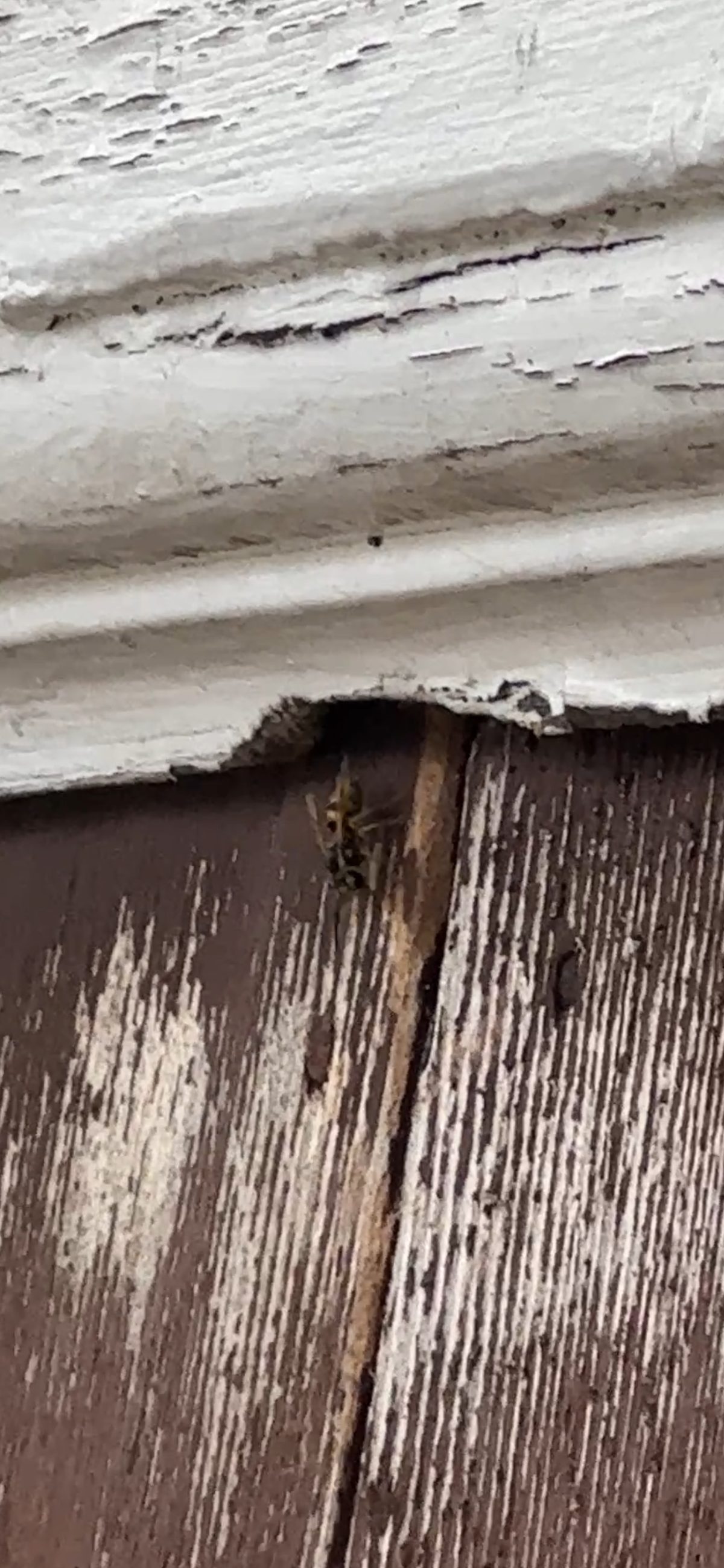
Here's the most important thing in this whole post, so read this part twice:
If wasps are nesting in your siding — do NOT seal the hole shut unless you are absolutely certain they're all dead.
I can't stress this enough. People see wasps going into a gap and their first instinct is to caulk it, foam it, plug it — trap them in there. Do not do this. When you seal their only exit, the wasps don't just give up and die. They look for another way out — and that way out is very often into your house. Instead of a nest on the outside of your wall, you suddenly have angry wasps coming through your outlets, light fixtures, and gaps in the interior wall. I've seen it happen, and it turns a manageable outdoor problem into a nightmare inside your living room.
The right order is always: eliminate the nest first, make sure the activity has completely stopped, and only then seal the opening so nothing moves in next season. Treat, confirm it's dead, then seal. Never seal first.
They'll nest in your retaining wall and woodwork too
It's not just siding. Any cracked or hollow wood is fair game. Here's a spot in my own wooden retaining wall — see that fresh, pale sawdust at the joint? That's a telltale sign of activity in the wood.
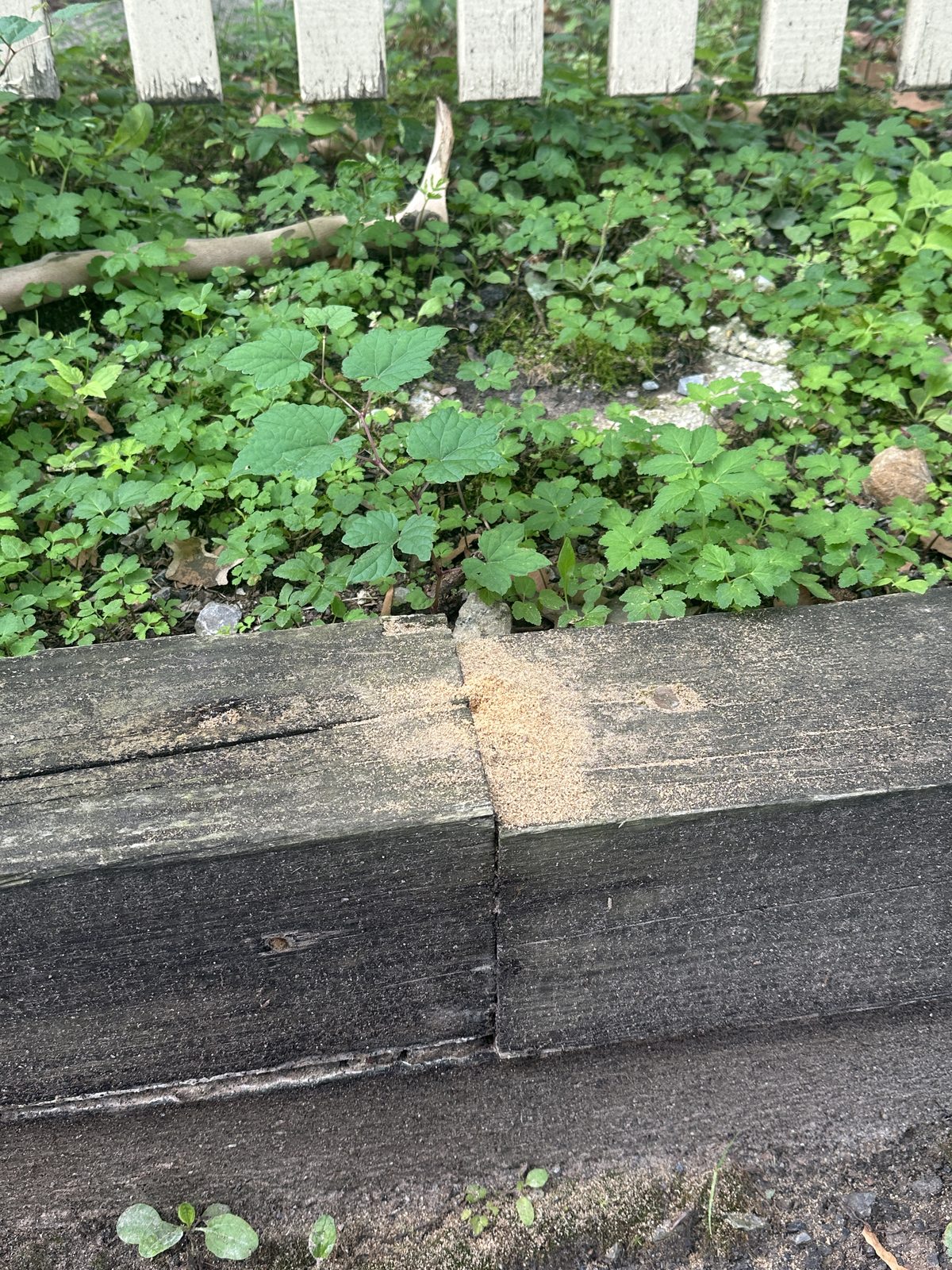
Retaining walls, deck posts, wooden fence rails, sheds — anywhere there's a crack, a hollow, or soft wood, wasps (and their cousins) will happily move in. The nest is usually hidden down inside, so you see the traffic at the opening but not the size of what's behind it.
Why wasps aren't a DIY job at this time of year
I get why people want to grab a can of spray and handle it themselves. Sometimes with a small, exposed nest, that's fine. But this time of year, the colonies are large, defensive, and often hidden inside a wall or structure where a can of store spray won't reach the core of the nest. You end up making them angry without killing the colony — and a swarm of provoked wasps is genuinely dangerous, especially if anyone in the house is allergic.
When I treat a nest, the goal is to get the treatment deep into where the colony actually lives, eliminate it fully, and confirm the activity has stopped — then deal with sealing the entry point so they don't return. Done in the right order, the problem is gone for good instead of just relocated into your walls.
What to do if you're seeing this
Watch for the traffic. A steady in-and-out of wasps at a gap in your siding, a crack in a wall, or a hole in woodwork means there's likely a nest inside — even if you can't see it.
Don't seal it, don't poke it, don't stand there watching too long. Give the area space, especially if anyone in your home is allergic to stings.
Get it treated properly, then seal. Eliminate the colony, confirm it's done, and close up the entry point afterward so next year's wasps don't find the same open door.
Catch it early, handle it in the right order, and wasp season stays outside where it belongs.
— After Hours Pest Control
Licensed in NY & NJ · Staten Island
Seeing wasps coming in and out of your siding or woodwork? Text me a photo of where they're getting in and I'll tell you what you're dealing with.
💬 Text (646) 681-5642